
Charity Taxes, Participation Down
Only three citizens have declared charity taxes so far for the last season. Those citizens have so far declared that they have given $2,614.23 USD to charity in Spring 2023, slightly down from the previous season’s $3,025.54. Some citizens reported that they were reëxamining the focus of their philanthropy, to better align their donations with their values. Still, citizens offered a wider range of those benefited this past season with their monetary, labour, and item donations. Citizens reported that they gave to religious and political organisations, social giving and welfare organisations, and so on, but their charity also included more acts of mutual aid (e.g., giving food, meals, and time and possessions) for distinct individuals and communities. With so few respondents, citizens volunteered 211 hours this past season, almost half of last season’s 305.
This report will be updated when more people declare their charity taxes.

Council: Constitutional Changes Expected
Since the position of speaker of the Council reverted to the Sôgmô in March, the Sôgmô has been considering amending the Council’s Rules and Procedures to give the monarch new constitutional powers as part of an effort announced in the Spring to streamline the Central People’s Government. That plan, internally called “Sandus for Householders,” though no draft of the plan has yet been published, seeks to restructure our republican government to make it easier for the average Sandum citizen to participate in Sandum civil society. Since Sandum citizens are workers and householders, micronational work is additional labour that burdens micronational citizens. As a result, the point is to streamline the government, including the Council, meaning that the Sôgmô will largely take on the powers of the Council’s speaker.
The Sôgmô has proposed following amendments to the Council’s Rules and Procedures:
1. The Sôgmô will administer the Council and may convene it at any time, but it should be especially convened on the Spring and Autumn equinoctes. There will be a requirement to hold an annual plenary meeting, and meetings may be staggered into regional sessions to better reflect Sandus’s broad time difference (8 hours!). Agendas must be published 10 days before a meeting, and must be adopted at the beginning of all Council meetings.
2. Bills must be submitted to the Council at least 10 days before a vote on their adoption.
3. The Council must adopt laws in synchronous sessions, or by asynchronous ballots introduced following a meeting when the Council considered the bill (e.g., if the Council decided amendments were necessary).
4. Any citizen or officer of the State of Sandus may petition the Sôgmô to convene the Council in a special session.
5. The Council may continue to pass resolutions on its Facebook forum (“Group”).
6. The quorum for the passage of laws shall be a majority of all Sandum citizens who are eligible to vote in national elections (though all citizens may vote in the Council). Quorum for the passage of resolutions shall be a majority of all Sandum citizens present in the forum.
7. As the Sandum people have a constitutional remedy to force a change to the Sôgmô’s powers, that is, by the annual Winter Solstice election,
Since the current Rules and Procedures remain unchanged, the Sôgmô will propose these amendments in an updated draft of the Rules and Procedures.
These changes to how the Council works makes the Council work more in line with what scholars know about how democratic assemblies worked in other direct democracies and especially republican Rome. There, elected officials had the power to convene assemblies in order to pass laws and plebiscites. With these changes now Sandum practice will be fairly same: the Sôgmô will be able to convene citizens in order to pass laws or motions and to hold public debate. Private citizens will also have power over the Council here too, since the cornerstone of a citizen’s democratic rights is the right to petition. The new rules allow citizens to petition the Sôgmô to convene the Council on their behalf, meaning private citizens may now have limited but direct control over the Council.
While this new law removes one of the “Three Grand Officers of State” from the constitution, it does so in order to make the playing field more free and equal in the Council, meaning that citizens can expect to be able to address the Council freely and on their own, without the need for a facilitator or speaker. Instead, moderation will come in other technical forms, ensuring the Council’s proper and equitable administration.

Tellus Gardens’ Productivity Up
Workers in Tellus Horticultural Coöperative in Sandus and Überstadt have reported that produce is trending upwards, meaning that this growing season may yield more food harvested than in previous years. Gardens have also expanded what they are offering this year, meaning that a wider variety of foods will be available at home gardens. This will have many benefits for citizens and workers of Tellus, since the coöp’s gardens provide nutritious and delicious food for citizens’ households and improve their quality of life.
Gardens in Rosewood, in Überstadt, have reported increased strawberry yields this year, while raspberries out on the West Coast are beginning to ripen. In the coming weeks gardeners in Rosewood anticipate very large picks of both raspberries and blueberries. “Our tomatoes and cucumbers are anywhere from four to six weeks ahead of last year, while peas have been similar to past years,” reports Baroness Rosewood.
Last year in Anne Arbour, the Sôgmô started an herb garden with several basil plants and one rosemary plant. The basil plants did not survive the winter, but the hardier rosemary did make it through the frost indoors at Senepyard Court. This growing season, the court’s rosemary is back to being productive, while the royal household has purchased a tomato plant and another basil plant. Both are growing beautifully, and several tomatoes are now ripening on the plant.
No other gardens have provided reports, but they may do so after the publication of this report.
On the Service Front:
Public Power in the State of Sandus
As part of the Sôgmô’s wider “Sandus for Householders” plan, several citizens and the Central People’s Government have begun using a word not used in Sandus in almost a decade: liturgy. Long seen as the origin of Sandus’s notion of service, especially service done for to benefit Sandus and our community, liturgies have been in the past projects or programs that individual citizens take on. An ancient Greek compound word for “people’s labour” (λαός + ἔργον), liturgies originally referred to volunteer work that Athenian men with means would do on behalf of the political community, and could include organising events and projects among other things. As part of making Sandum governance part of community government, as opposed to the perceived daunting abstractness of a “state,” liturgies have now seen a resurgence as a means of micronational activity and state power.
At the Spring Equinox, the Sôgmô announced the creation of four “quadrants,” a micronational version of “tribes” as a division of citizens who do service in a particular season. In the last season, only a quarter of Sandum citizens have volunteered to take on a quadrant, and none took the Vernal (Spring) quadrant. Citizens can ask the Sôgmô to allot them a quadrant if they want to do service for Sandus.
Finally, the service plan is connected to the new Sandum geography plan (see below) in that certain localities may decide to sponsor a particular project, program, or event.
FAQ about Service and Liturgies
How can you sign up for service and to receive a quadrant?
To sign up, send a message to the Sôgmô saying that you would like to do service or to receive a quadrant.
I would like to help my community and do service, but I don’t know how.
There is a lot in Sandus that has not been done or considered. You can ask the Sôgmô “what needs to be done,” but it is also important to think about what you are passionate about. What hobbies, skills, or activities do you do that you do not see represented in Sandus, or that we can improve on? By doing service in that area, you help Sandus and your whole community.
I have an idea for service, but what do I do to get started?
After you message the Sôgmô to inform them of your service idea (proposal), they will ask you to come up with a plan. This can be as simple as a restatement of your proposal as an action plan, but you can think broader too. For example, after you think about what your service will be, you can think about what you need to get started, who is involved, what ministry or coöp or enterprise would be related to this service project, and so on. Once you are done with your plan, you will submit it and the Sôgmô may follow up with more questions if needed.
I don’t want to lock myself in to doing something I end up disliking. What can I do?
That is fine! You are not locked in or tied down to a particular project or program. Service is freely given and associated, much like your micronational citizenship. You can end when you want, and even thinking about service will be a benefit. It’s an absolute sum: even a memo or an idea about service may be more than we have already done in a particular area. Anything helps!ôgm
I have an idea for service, but it seems like something that a bureaucrat will have to do in the future to keep it going. Should I still do my liturgy?
Yes! As part of your plan, you can include steps that can be taken after your project is completed. If you see your service to be a constant or recurring liturgy, that will be helpful to note in your proposal and plan.
When in doubt, remember: Sandus is a micronation built by our minds and hands.
A Plan for New Sandum Geography
In January, the Sôgmô proposed a bill to the Council meant to establish new local juridictions and governments. Historically, Sandus has only had provinces as administrative divisions of citizens loosely based on geography and relationships. In the last few years, as citizens have travelled for Sandum holidays and have fostered local communities, however, it has become clear that another level of geography is needed on the local level. In the last year, the Sôgmô first began using also the concept of a statio, or a place of residence or meeting that all citizens have. The proposed law would make a third level of geographic division, a municipality, and also would more clearly lay out how and under what conditions a local government may become organised.
Now, a new plan is being prepared this summer to restructure the State of Sandus. The Sôgmô felt that a plan was necessary to complement the bill since the new bill would have ramifications for Sandus’s existing centralised provincial structure. Currently, Sandus is made up of four provinces: Kremlum Sandus, Quercus Candida, Sandus Ulterior, Sandus Europae. The latter two are in some sense metropoles, since they are the cultural heartlands of Sandus and are seats of government. (In 2017, the capital of Sandus moved from Kremlum Sandus to Quercus Candida, but the royal family still has a residence in Kremlum Sandus.) The latter two have historically been conceived us as broadly geographic but without any bounds per se.
Municipalities will be local administrative divisions, but “local” may be a little misleading. Here, local is meant to mean citizens who are close enough to one another that they can reasonably travel to be together for a day trip. The plan proposes several municipalities that include citizens who live over 100km apart, but that is because with modern transportation traveling between those distances in a day is now a reasonable and possible.
Municipalities are also this new geographic plan’s connection to the service plan (see above). In Latin, a municipium means a corporate body made up of municipes, or people who “take on service together” (munus, service + –ceps, from capere “to take”). Hence, municipalities can also be said to be communes, communities where service is done together in a shared place. In Sandus, this means that municipalities may decide to hold service together on certain days, including with cultural, state, or local holidays. But they can also decide how they will be constituted.

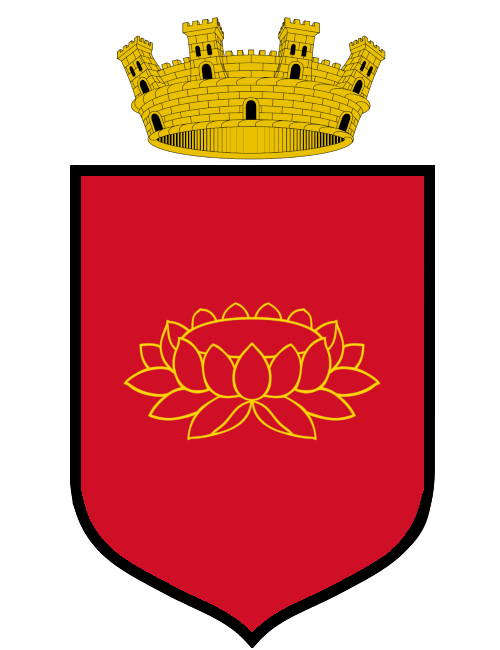

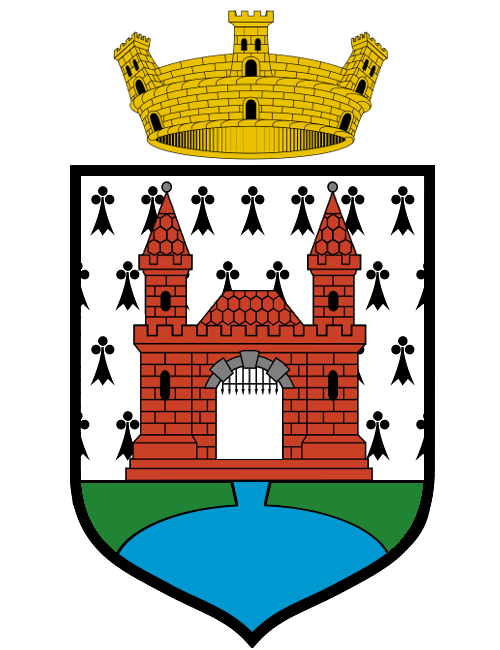




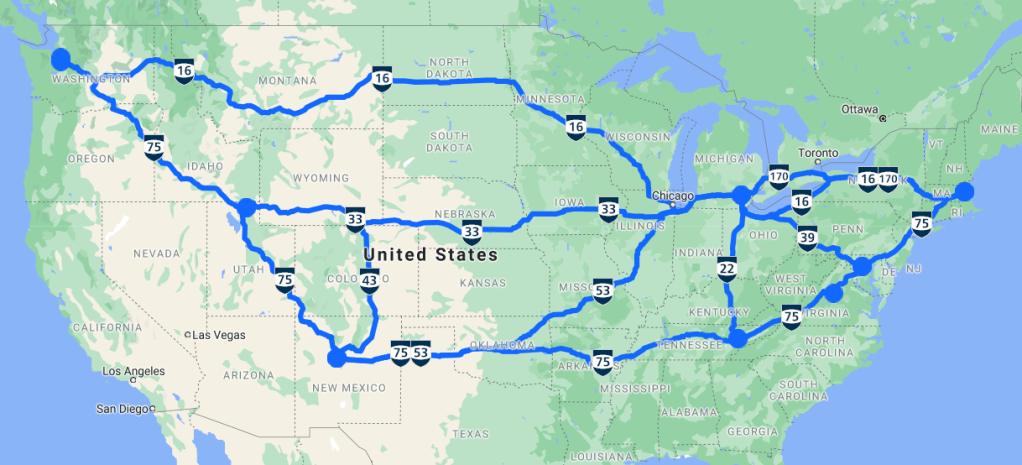
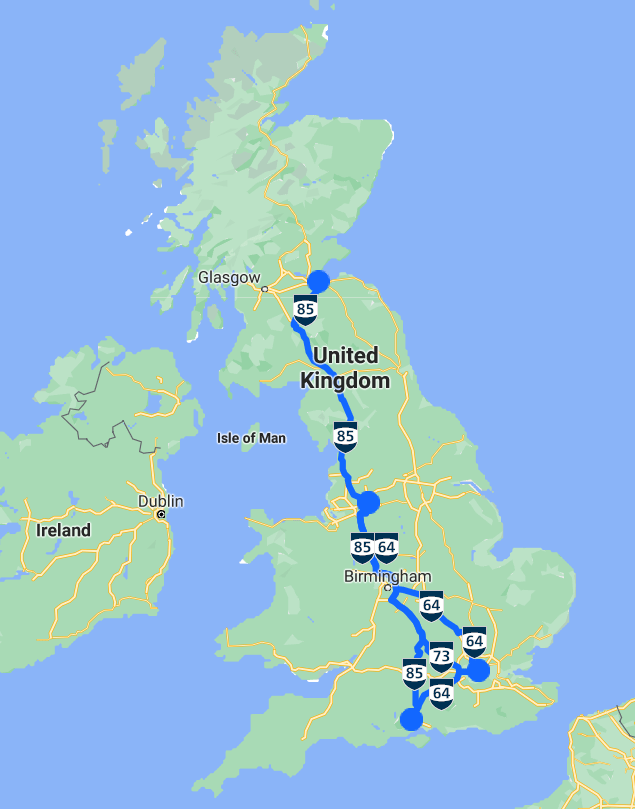
The plan will change the structure of Sandus’s provinces so that while they remain administrative divisions of citizens, they will also take into account local geographic conditions for each citizen. Under this proposal, Sandus will now have three provinces and three organised municipalities. The three municipalities will be in one province, Auroria, but proposed unorganised municiaplities are also included in italics.
- 1. Auroria, or Dawnland Sandus: Eastern North America
- a. Castrum Calvert, or the Chesapeake: formerly Kremlum Sandus province
- b. Anne Arbour, or the Capital: formerly Quercus Candida province
- c. Altera Anglia, or New England
- 2. Sandus Occidentalis, or Western Sandus: Western North America
- d. Snohomish, or the Salish Sea
- 3. Sandus Europae, or Sandus in Europe: Great Britain
- e. Manchester, chosen for the city’s central location
Finally, let’s return to stationes. These are the “nuclei” of Sandus’s territory, since our micronation follows the sovereign gradient condominum theory about our where our land is. This will remain a blurry spot of our law for the foreseeable future, since stationes are not only residences but can also include other places where a citizen may be expected to be throughout their day, like workplaces, communal spaces, or other non-micronational places. Stationes will also have implications for adjacents, Sandus’s equivalent of a noncitizen resident that receive legal status because they are related somehow to a citizen (i.e., as kin, or as friends, acquaintances, or associates). Another consequence of stationes will be their connection to Sandum nobility, as well, since stationes may be places that citizens can receive hospitality from Sandum householders. Since baronies and baronetcies exist as entitled fiefdoms granted to nobles in exchange for service and the expectation of hospitality, nobility will also likely have some future connection to stationes when considered, planned, and eventually spelled out in law.
 sandus.org
Leave a comment